
The United States launched dozens of strikes on Iran early on Wednesday in what it said was retaliation for Tehran’s attacks on commercial ships in the highly contested Strait of Hormuz, sparking widespread fears of the renewal of all-out war in the Middle East.
After the US attacks, President Donald Trump told reporters at a NATO summit in Ankara, Turkiye, that he thinks the memorandum of understanding (MoU) with Iran is “over”. While he “might” allow peace talks to continue for now, he said, he believed they were a “waste of time”.
- list 1 of 4US strikes southern Iran, Tehran claims counterattacks on military sites
- list 2 of 4US strikes Iran despite promised pause for Khamenei funeral
- list 3 of 4Oil surges as US strikes Iran, reversing return to pre-war prices
- list 4 of 4How the US-Iran conflict is reshaping Africa’s geopolitical opportunities
end of list
Brent crude rose 6 percent to $78 a barrel, while European stocks fell 1.6 percent, following his remarks. The dollar strengthened and government bond yields climbed, as investors weighed the risk of a renewed flare-up in inflation.
The escalatory strikes on Iran came as peace talks were ongoing between the two countries amid the days-long funeral of Iranian Supreme Leader Ayatollah Ali Khamenei, who was killed in the early minutes of the US-Israel war on Iran back in February. They represent the largest such attacks since April, when both sides initially agreed to ceasefire talks.
Iran’s Islamic Revolutionary Guard Corps (IRGC) said it had responded to the strikes by targeting US assets in neighbouring countries as sirens went off in Bahrain and Kuwait early on Wednesday. One of its members was killed by “enemy drones”, the IRGC said.
Both sides have blamed each other for breaking earlier agreements outlined in the MoU, which initiated a 60-day peace negotiation process three weeks ago. Wednesday marks the third time the US has launched major attacks on Iran while talks are ongoing, something Tehran has said has caused trust to break down.
Advertisement
Here’s what we know:

What has happened?
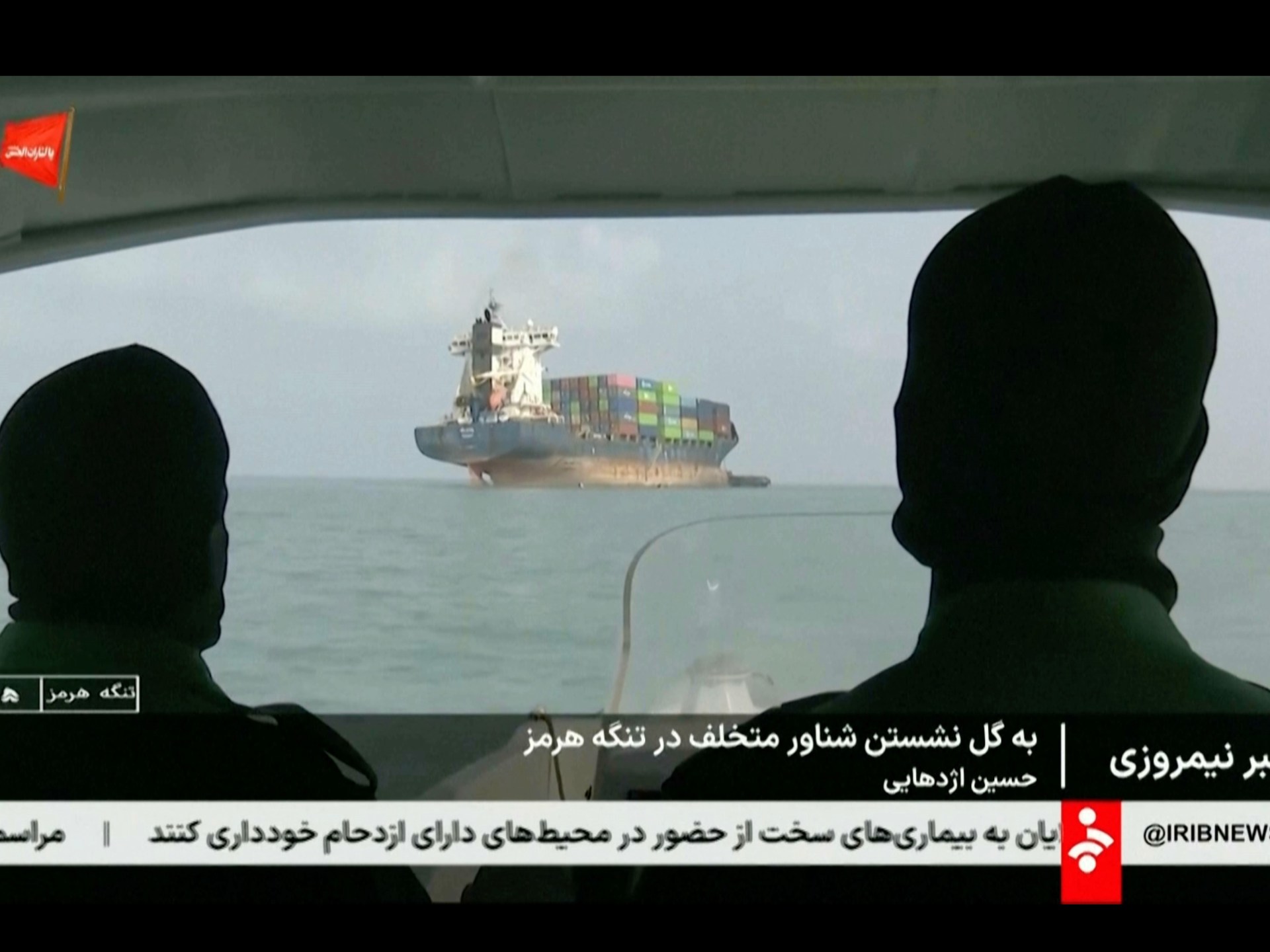
The US military’s Central Command (CENTCOM) said it had launched strikes on “over 80 targets” on Tuesday, early on Wednesday in local time, in Iran in response to the attacks on commercial vessels that were transiting the Strait of Hormuz hours before.
On Wednesday, US President Donald Trump told reporters in Ankara, Turkiye, where he is attending the NATO summit, “We attacked very powerfully last night, the very dangerous people from Iran.”
“They’re sick, there’s something wrong with them,” he added.
Iran, CENTCOM said, had attacked three vessels: the Marshall Islands-flagged M/T Al Rekayyat, Saudi Arabia-flagged M/T Wedyan, and Liberian-flagged M/T Cyprus Prosperity, which are thought to have been sailing close to the coast of Oman.
Iran has directed all shipping to follow its map for a “safe route” through the strait, which takes ships much closer to its own coast and marks a section of Omani territorial waters as a “restricted zone”. Local television reported that the ships had ignored warnings to change direction from Iranian forces.

In response to the shots fired at tankers, CENTCOM said in a statement: “US forces struck Iranian air defence systems, command and control networks, coastal radar sites, anti-ship missile capabilities, and more than 60 Islamic Revolutionary Guard Corps small boats in and near the strait to degrade Iran’s ability to continue attacking international commerce flowing through the international trade corridor.”
The US also revoked a sanctions waiver on Iran in response to the strikes on tankers in the strait.
CENTCOM also warned that more strikes were imminent if Iran continued to act “outside of agreements”. The MoU stipulates that Iran will allow free passage through the strait for at least 60 days while peace talks continue.
Hossein Royvaran, a Tehran-based analyst, told Al Jazeera on Tuesday that tankers may have been targeted because they strayed into an area where Iranian teams were performing mine-clearing operations.
“The area near Oman is likely full of mines,” said Royvaran.
“There is a possibility that these ships are headed in directions where Iranian teams in that area are clearing mines, and the ships’ movement might have threatened those teams.”
Advertisement
The strikes came hours before Trump departed for the NATO summit.
Which locations in Iran have been hit in strikes?
Iranian media reported several explosions in the southern port city of Sirik, where projectiles were said to have hit commercial and fishing piers. Several people were injured by shrapnel, but the number of casualties is not yet clear.
Strikes were also reported on the strategically important Qeshm Island in the Strait of Hormuz and areas near the port city of Bandar Abbas, one of the ports the US Navy was blockading before the MoU was signed.
Two military bases in Iran’s southern Bushehr province were hit by enemy projectiles, a security deputy to the province’s governor said, according to Iran’s semi-official Fars news agency on Wednesday.
One base was struck in Dashti county and another near the town of Chogadak, both in Bushehr province, early in the morning, the official said.
No deaths or injuries have been reported so far as a result of the attacks, Fars said.

What other action has the US taken?
The US has reimposed sanctions on Iranian oil, according to a late Tuesday statement from the Department of the Treasury. During the war, Trump temporarily waived sanctions on cargoes of oil already at sea to ease the energy crisis arising from the closure of the Strait of Hormuz.
It granted Iran a 60-day full waiver, allowing Tehran to sell crude oil amid the ongoing peace talks as part of the MoU signed on June 17. That waiver had been set to expire on August 21.
Now, the reimposed sanctions take effect from July 7 for new oil sales. However, there will be a grace period for ongoing, shipped sales made before July 7, the US Treasury said, with the money from those sales placed in a “blocked, interest-bearing account”.
Reporting from Tehran for Al Jazeera, Resul Serdar Atas said the new sanctions would have a huge impact on the Iranian economy.
“For Iran, almost the only lifeline to sustain the economy is the oil and petrochemical exports, and that’s what the MoU was about. It gave Iran an incentive to reopen the Strait of Hormuz, and in return lifted the sanctions on Iran’s oil and petrochemical products.”
How has Iran responded?
On Wednesday, the IRGC said it had launched retaliatory strikes on 85 US military targets in Bahrain and Kuwait, as sirens sounded in both countries.
The IRGC said it “destroyed 85 major US military installations in Port Salman, [the US] Fifth Naval Base in Bahrain, and Kuwait’s Ali Salem Airbase, and shot down an enemy MQ9 drone that attempted to interfere in the operation”.
Iran’s Ministry of Foreign Affairs strongly condemned the “aggressive attacks and gross violation” of the MoU by the US.
“The terrorist US military, in clear violation of Article 2, Paragraph 4 of the United Nations Charter, committed military aggression against several monitoring and surveillance centres on the southern coasts of Iran,” the ministry said in the early hours of Wednesday, noting that these strikes “constitute a flagrant violation of Paragraph 1 of the Memorandum of Understanding on the Termination of War, which mandates the cessation of military operations”.
Advertisement
The statement also highlighted “the international legal obligation of all governments, particularly neighbouring countries located on the southern coast of the Persian Gulf, to prevent aggressor parties from utilising their territory and facilities to conduct aggressive acts against the Islamic Republic of Iran”.
It added that Iran’s armed forces “will not hesitate in defending Iran’s territorial integrity, national sovereignty, and national security against US military aggression in accordance with Article 51 of the UN Charter, and will target the source and origin of the aggression”.
In a post on X, Parliament Speaker and lead negotiator Mohammad Ghalibaf said the strikes on Iran, the reimposition of sanctions and continued Israeli attacks on Lebanon all represent “major MOU violations by the US”.
“The era of bullying and extortion is over. It leads nowhere. We don’t fold,” he said.
In a Telegram statement on Wednesday, Iran’s Foreign Minister Abbas Araghchi said the US strikes had “rendered key, fundamental elements of the war-ending agreement ineffective”.
“The US regime, having reneged on its commitments, bears responsibility for the dangerous consequences of this escalation,” he said.
What is happening with the peace talks?
They have been thrown into uncertainty.
Trump told reporters at the NATO summit that he thinks the MoU with Iran was “over”. He added that “I might let my wonderful negotiators keep talking”, but said he personally believed it to be a “waste of time”.
Al Jazeera’s defence editor, James Bays, highlighted the uncertainty arising from Trump’s remarks. “So, is this just tough talk from Trump, trying to put a line down and say, ‘this is unacceptable and I’ve shown you my response’? Or does this mean he is really tearing up the Memorandum of Understanding that was agreed on about three weeks ago?”
The 60-day MoU halted all fighting, including in Lebanon, as both sides worked to iron out details of Iran’s nuclear programme. The agreement required Iran to reinstate the passage of commercial vessels in the Strait of Hormuz to pre-war levels, while the US issued a waiver on sanctioned oil exports and unfroze Iranian assets.
How have other countries and organisations responded?
NATO Secretary-General Mark Rutte strongly backed the US actions, saying the response from Washington was warranted following Iran’s attacks on commercial vessels.
“I think it was absolutely necessary,” he told reporters in Ankara, amid the NATO summit, accusing Iran of violating the ceasefire.
Jassem Mohamed Albudaiwi , Secretary-General of the Gulf Cooperation Council (GCC), condemned Iranian attacks on Bahrain and Kuwait, describing them as a flagrant violation of the two countries’ sovereignty and a continuation of Tehran’s efforts to undermine regional peace efforts.
“The attacks confirm Iran’s continued approach aimed at undermining international and regional efforts to establish security and peace and resolve the crisis,” Albudaiwi said.
Kuwait’s Foreign Ministry also condemned strikes on US military assets on its territory “in the strongest terms, the repeated sinful Iranian attacks on the State of Kuwait, the latest of which occurred this morning”.
In a statement, the ministry denounced the incident as “a flagrant violation of its sovereignty, a direct threat to its security, stability, and the safety of its citizens”, as well as “a grave violation of the rules of international law, the United Nations Charter, and Security Council Resolution 2817”.
Oman’s Foreign Ministry released a statement condemning Iran’s attacks on sites in Bahrain and Kuwait as well as on ships in the Strait of Hormuz.
Advertisement
Qatar’s Foreign Ministry also strongly condemned Iranian attacks on Bahrain and Kuwait, which it said it considered a blatant violation of the sovereignty of both countries and a flagrant breach of international law.
In a post on X, the ministry stressed the need to spare the region the consequences of what it described as the unjustified attacks, to continue the path of dialogue and diplomacy, and to de-escalate tensions.
The Iranian attacks show Tehran remains incapable of committing to the requirements of de-escalation and “turning the page on war”, senior UAE diplomat Anwar Gargash said.
“The Gulf Arab states cannot remain a target for Iran’s wavering between the logic of escalation and the path of rationality, stability and peace,” Gargash, a diplomatic adviser to the UAE president, wrote in a post on X on Wednesday.
Egypt also strongly condemned Iran’s repeated attacks on Kuwait, Bahrain and other Gulf states, describing them as a flagrant violation of sovereignty and an unacceptable escalation that threatens regional stability.
In a Foreign Ministry statement issued on Wednesday, Cairo said it rejected all actions that infringe on the security of fellow Arab states and called for restraint and de-escalation to preserve peace in the region.
So what happens next?
Muhanad Seloom of the Doha Institute of Graduate Studies told Al Jazeera that the US appeared to be signalling that its attacks were limited, and the MoU was technically on. However, Trump’s comments at the NATO summit have now thrown this into doubt.
“If the US wanted to use force in a different way, they would be choosing different targets,” he said.
Iran likely launched attacks on commercial ships to provoke the US at a sensitive time for both countries, Harlan Ullman, a retired senior US naval officer, told Al Jazeera.
“My view is Iran is taunting the United States,” Ullman said. “Donald Trump has already criticised NATO for not participating in its war in Iran, has criticised NATO for not spending enough on defence. And my guess is that Iran is trying to further the divide between the United States and NATO by accentuating attacks now, believing that the United States will be limited in what it can do because if it is seen to be attacking the funeral processions that are going throughout the country.”
Iran, Ullman said, could also be stalling for more negotiation time before the August deadline. Ultimately, the analyst added, “whether this is going to be peace or war, my guess is that both sides will want to de-escalate”.
Related News
VIDEO: World Cup Day 18: Canada beats South Africa, through to last 16
Iran reappoints a familiar face to powerful post during Khamenei funeral
UN chief fears for ‘millions’ of Palestinians amid UNRWA funding shortfall