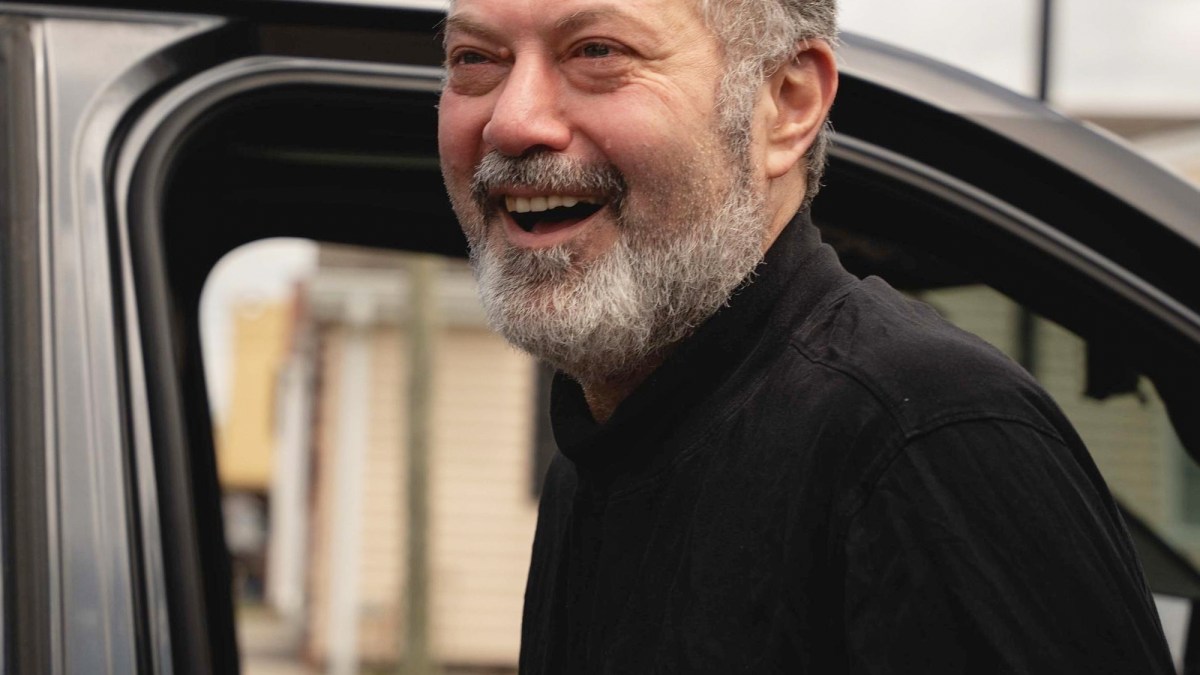

A federal judge in the United States has ordered the release of Salah Sarsour, a Muslim leader who says his detention by immigration authorities was a form of retaliation for his outspoken support of Palestine.
On Thursday, US District Judge James Patrick Hanlon ruled that Sarsour had raised a “substantial” claim that he was targeted for speech protected under the First Amendment of the US Constitution. That, in turn, could “render his detention unlawful”.
- list 1 of 3Rights groups, Milwaukee leaders slam ICE’s arrest of Palestinian advocate
- list 2 of 3Scholar Rumeysa Ozturk returns to Turkiye following Trump deportation push
- list 3 of 3Mahmoud Khalil to appeal US deportation case to Supreme Court
end of list
Hanlon also dismissed claims made under President Donald Trump that pro-Palestinian speech undermines US foreign policy interests.
“The mere invocation of foreign relations concerns does not automatically trump First Amendment rights,” Hanlon, who was nominated by Trump in 2018, wrote in his decision.
The Trump administration has used broad claims of national security to arrest and detain pro-Palestine foreign nationals in the US, drawing criticism from rights advocates.
Civil liberties groups have depicted those efforts as an attempt to penalise voices critical of Israel and US foreign policy.
Sarsour, a legal permanent resident in the US, was released several hours after Hanlon’s decision. In a prepared statement, he celebrated the ruling as a free-speech victory.
“I am so relieved to be with my family. For 80 days, I haven’t been able to step outside and breathe fresh air,” said Sarsour, who has lived in the US for nearly 32 years.
“This experience is a reminder to all of us that we must fight together for our right to be a voice for the silenced. I will never stop speaking for Palestine and humanity, wherever I am.”
Lawyers for Sarsour, who has type two diabetes, say he lost more than 30 pounds (about 13.6kg) during his nearly three months in detention. He is the president of the Islamic Society of Milwaukee, the largest mosque in the Midwestern state of Wisconsin.
Advertisement
On March 31, his car was reportedly pulled over by agents from Immigration and Customs Enforcement (ICE), and he was transferred to a detention facility in Indiana, pending his removal from the country.
Sarsour has no criminal record in the US, but the Department of Homeland Security (DHS) called him a “criminal and a terrorist”.
It accused him of lying on his green card application and failing to disclose that he was convicted by an Israeli military court for allegedly throwing stones and Molotov cocktails at Israeli forces.
The 53-year-old Palestinian American grew up in the occupied West Bank. He has denied the charges.
Rights groups have noted that such allegations are frequently wielded against Palestinians in the occupied West Bank and that the Israeli military court system convicts Palestinians at a rate of nearly 100 percent. Such cases sometimes rely on confessions extracted through torture.
In Thursday’s decision, Judge Hanlon also questioned why the Trump administration suddenly considered Sarsour a threat after more than three decades in the US.
He ordered Sarsour to be returned to Wisconsin from Indiana so that he could stay at home while his case proceeds.
Since taking office for a second term, Trump has sought the mass deportation of immigrants from the US. He has also led a crackdown on pro-Palestinian voices, accusing them of anti-Semitism.
In deportation hearings against such activists, Trump administration officials have relied on a section of the Immigration and Nationality Act that allows the secretary of state to “exclude” foreign nationals considered to have “potentially serious adverse foreign policy consequences for the United States”.
But rights advocates have argued that the law does not supersede the First Amendment’s free-speech protections. Critics have also questioned whether the free speech of activists has actually impeded Trump’s foreign policy.
Mahmoud Khalil, a pro-Palestine activist at Columbia University, was among those targeted under the Immigration and Nationality Act.
In March 2025, he was arrested and held in detention by immigration authorities before a judge ordered him released in June of that year. His case, however, has continued, and he remains under threat of deportation.
In a social media post on Thursday, Khalil welcomed Sarsour’s release and expressed solidarity with the Milwaukee leader.
“Salah Sarsour is going home. After more than 80 days held away from his family, a federal judge ordered his release and affirmed what should never have been in question: speaking up for Palestinian rights is protected by the First Amendment,” said Khalil.
Advertisement
“Welcome home, Salah. This is what we keep fighting for.”
Related News

Russian attacks in Ukraine kill nine, damage historic Kyiv cathedral

Trump says US strike killed Tren de Aragua gang boss with Venezuela help
Israel says cutting ties with top EU diplomat over ‘apartheid’ comments