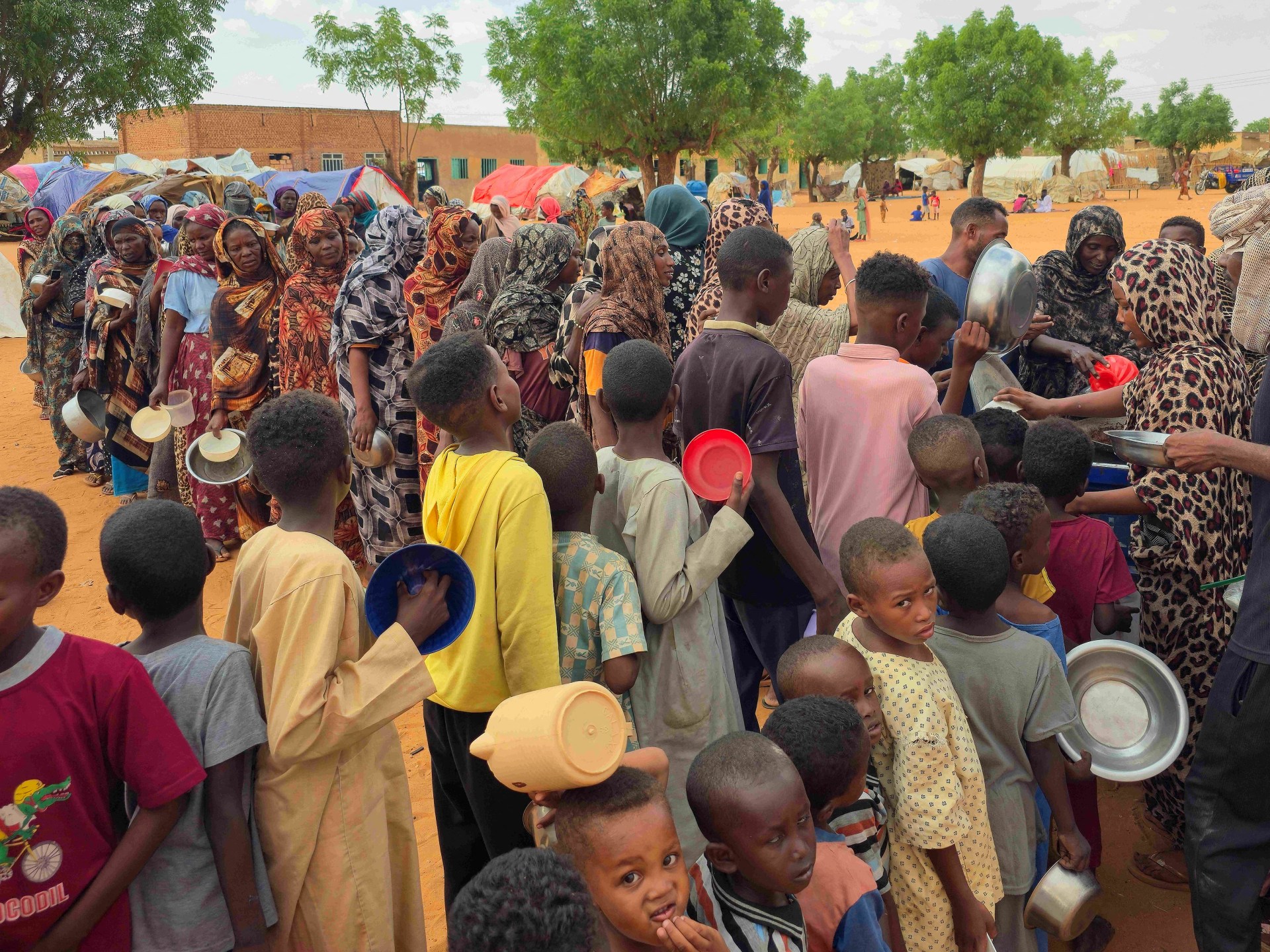

More than 11,000 people, including over 5,500 children, have fled escalating fighting around Sudan’s strategic city of el-Obeid over the past two weeks, according to Save the Children, as the United Nations warns that up to 500,000 civilians could be at risk if the violence intensifies. The city has become the latest focal point in a war that has already triggered the world’s largest displacement crisis.
For much of Sudan’s three-year civil war between the Sudanese Armed Forces (SAF) and the paramilitary Rapid Support Forces (RSF), international attention has centred on Khartoum and the Darfur region. In recent weeks, however, attention has increasingly shifted to el-Obeid as fighting has intensified across Kordofan, prompting warnings from UN officials and humanitarian organisations that another acute humanitarian emergency could be unfolding.
Francesco Lanino, deputy country director for Save the Children in Sudan, said the consequences of displacement extend far beyond the loss of housing.
“For children, displacement is far more than the loss of a home,” he said. “It often means losing access to school, healthcare, clean water and the support networks that help them feel safe and protected. Many have already been displaced multiple times, and without urgent action to protect civilians, ensure humanitarian assistance can reach those in need and prevent further violence, thousands of children could be forced to flee while facing increasing risks to their safety, health and wellbeing.”
Advertisement
Why is el-Obeid so important?
El-Obeid, the capital of North Kordofan state, lies about 360km (224 miles) southwest of Khartoum at the intersection of roads linking central Sudan with Darfur and the country’s southern states.
That location has made it one of Sudan’s most important commercial centres and a key logistical hub for both military operations and humanitarian aid.
The city has remained under the control of the SAF, making it one of the army’s most important positions in western Sudan. Military analysts say control of el-Obeid helps shape movement along key supply routes connecting central Sudan with Kordofan and Darfur, helping explain why both the SAF and the RSF consider it strategically important.
Why has the fighting intensified now?
The battle for el-Obeid reflects a broader shift in Sudan’s war.
After the SAF regained territory in and around Khartoum earlier this year, fighting increasingly concentrated in western Sudan, particularly across the Kordofan and Darfur regions.
The RSF has expanded military pressure around el-Obeid while the army has reinforced its positions inside the city. UN officials have warned that the growing military build-up raises the risk of a wider assault, although neither side has announced plans for a full-scale offensive.
The conflict has also evolved. Drone warfare has become an increasingly prominent feature of the conflict, targeting military positions as well as infrastructure civilians rely on, including fuel depots, electricity networks and water facilities.
What are civilians experiencing?
Civilians in el-Obeid are facing mounting hardship as the fighting intensifies and essential services come under increasing strain.
Aid agencies and the United Nations say repeated attacks have disrupted electricity and water supplies, contributed to fuel shortages and driven up the prices of food and other essential goods. Damage to water infrastructure, combined with restricted humanitarian access, has also heightened concerns about waterborne diseases, including cholera.
Many of those now fleeing el-Obeid had already been displaced by fighting elsewhere in Sudan, meaning they are being uprooted for a second or even third time. Save the Children says more than half of the people displaced in the latest wave are children, underscoring the disproportionate impact the conflict is having on young people and their families.
Why are the UN and aid agencies so concerned?
The immediate concern extends beyond the fighting itself to the possibility that el-Obeid could become the next city to experience prolonged urban warfare, with civilians trapped between rival forces.
Advertisement
According to the United Nations, up to 500,000 civilians in and around el-Obeid could be at risk if violence escalates. The figure includes longtime residents as well as people who had already sought refuge in the city after fleeing fighting elsewhere in Sudan.
![People are transported in the back of a truck, some 30km east of the city of El-Obeid, in Sudan's North Kordofan region, on January 9, 2023. -[ASHRAF SHAZLY / AFP]](https://www.aljazeera.com/wp-content/uploads/2026/06/AFP__20230119__336T3JG__v3__HighRes__SudanAnimalCamel-1780778998.jpg?w=770&resize=770%2C513&quality=80)
Humanitarian organisations warn that continued hostilities could further restrict the delivery of humanitarian assistance into North Kordofan at a time when many communities already face shortages of food, medicine, fuel and clean water.
The UN has also raised alarm over the growing use of drone strikes, warning that repeated attacks on civilian infrastructure are deepening the humanitarian crisis and making it harder for people to access essential services.
Why are officials comparing el-Obeid and el-Fasher?
Officials increasingly fear el-Obeid could follow the trajectory of el-Fasher, the capital of North Darfur, where months of fighting left civilians trapped, humanitarian access severely restricted and basic services devastated.
The comparison does not mean el-Obeid has reached the same stage. Rather, UN officials say it highlights the risk that the city could follow a similar trajectory if fighting intensifies and civilians cannot safely leave or receive humanitarian assistance.
El-Fasher has become one of the starkest examples of the human cost of Sudan’s war. Since fighting escalated there in 2024, repeated clashes, shelling and attacks on displacement camps have forced hundreds of thousands of people to flee, while hospitals, markets and other civilian infrastructure have been damaged or destroyed. Aid agencies have repeatedly warned that restrictions on humanitarian access have deepened hunger and disease, leaving many residents with little access to food, clean water or healthcare.
UN officials fear a similar pattern could unfold in el-Obeid if military pressure continues to build. The city has become a refuge for people displaced from other parts of Sudan, meaning a major offensive could trap large numbers of civilians while further disrupting aid operations across Kordofan. Preventing another prolonged urban battle, they say, is critical to avoiding an even wider humanitarian crisis.
What could happen next?
The next phase of the conflict will depend on whether the current military pressure around el-Obeid develops into a sustained ground offensive or whether diplomatic efforts succeed in reducing hostilities and improving humanitarian access.
For the Sudanese Armed Forces, holding el-Obeid is important to maintaining its position in North Kordofan and preserving access to western Sudan. For the Rapid Support Forces, increasing pressure on the city could strengthen its military position in the region, although the outcome of any future offensive remains uncertain.
If fighting escalates, aid organisations warn that more families are likely to flee while shortages of food, clean water, fuel and medical supplies deepen. A wider battle could also further disrupt humanitarian operations across Kordofan, a region that serves as an important corridor for assistance to communities affected by the war.
Advertisement
More broadly, the battle for el-Obeid reflects the changing geography of Sudan’s war. As front lines shift away from Khartoum, Kordofan is emerging as one of the conflict’s most consequential theatres, carrying profound implications not only for the military balance but also for hundreds of thousands of civilians caught in the fighting.
As the latest wave of displacement illustrates, the humanitarian consequences are already unfolding. Whether el-Obeid becomes another prolonged urban battleground, or whether sustained international efforts help avert a wider assault, may determine not only the next phase of Sudan’s war but also the fate of hundreds of thousands of civilians caught in its path.
“The signs from el-Obeid are clear and unmistakable: another human rights catastrophe is unfolding in Sudan,” UN High Commissioner for Human Rights Volker Turk warned late last week. “This is not a drill. It is a red alert that needs to land on the desks of heads of state and government around the world.”
Related News
Yemen’s Houthis threaten Saudi Arabia after alleged airspace intrusion

US Senate votes to halt Iran war, bucking Trump

US announces framework agreement between Israel and Lebanon