
Since the beginning of the US-Israel war on Iran, President Donald Trump has been critical of his European allies for not supporting the military campaign against Tehran.
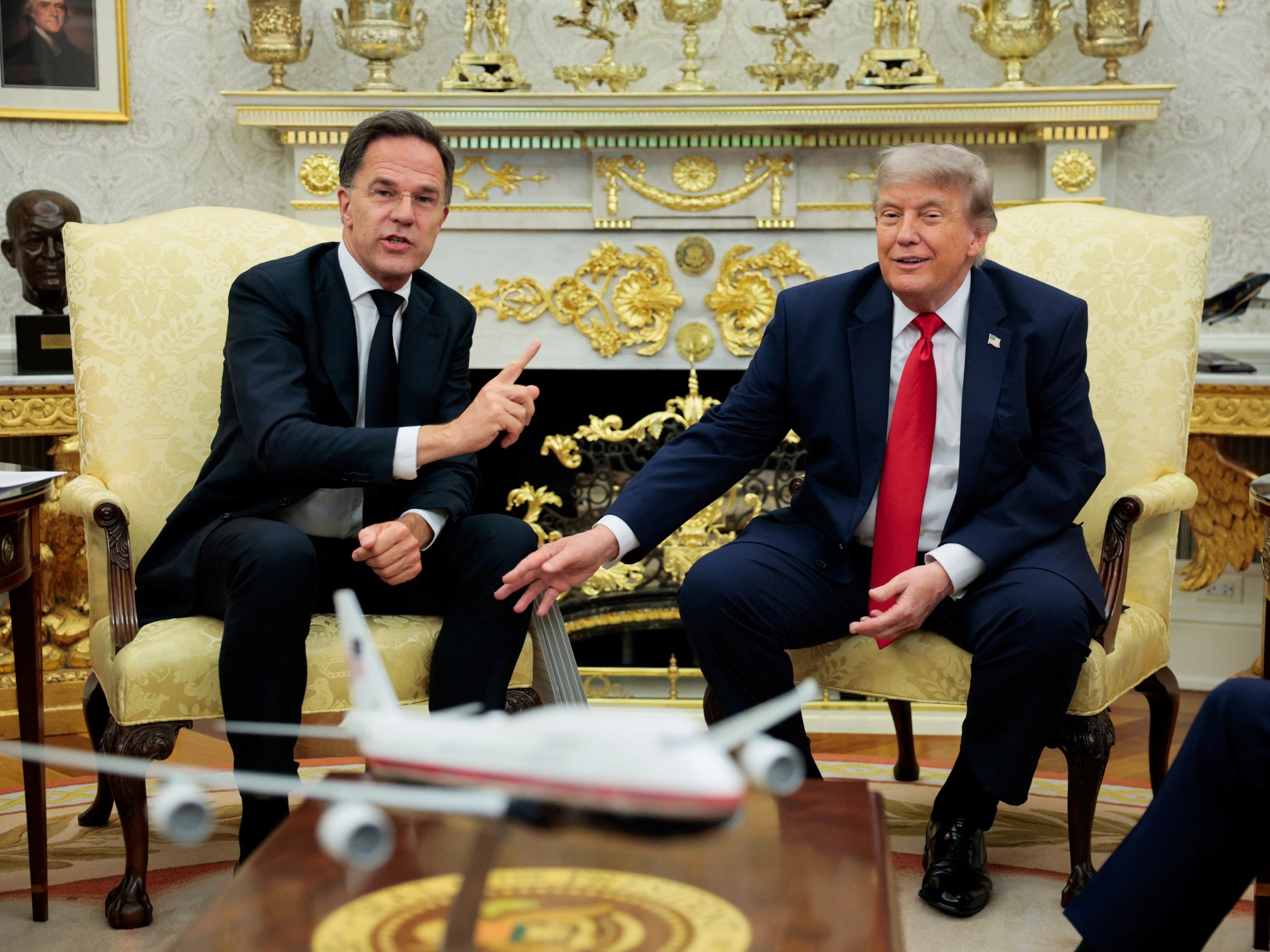
The United States president expressed his displeasure with members of the transatlantic alliance during a meeting with NATO chief Mark Rutte on Wednesday.
“I was disappointed with Italy. I was disappointed with the UK, Germany, and France. We were disappointed with most of them. Spain is a horror show,” Trump said.
Speaking to reporters in the Bahraini capital Manama, Trump’s top diplomat, Marco Rubio, on Thursday repeated the US claims that European help fell short during the conflict. “Europe not allowing use of military bases undermines alliance between the continent and US,” he said.
NATO’s Rutte, who has been visiting the US to ease the transatlantic tensions, has revealed more about the involvement of European nations in the war.
“Ally after ally,” he said, made their bases available to the US military during the war on Iran. Rutte’s comments revealed that aside from “isolated cases”, European allies had, in fact, helped the US with logistics during the war.
So, why has Trump been upset with European allies and what has been the level of participation of EU nations in the war?

How did EU nations participate?
Rutte referred to Italy and Romania’s assistance to the US military, for instance, during the conflict, pointing to the role European bases played in the war.
Advertisement
When you look at the numbers, 4-5,000 US planes [were] taking off from bases in Europe in the six weeks this war took place,” Rutte told Fox News in an interview.
“ I do agree there’s reason for disappointment, absolutely,” Rutte said. “But my argument is this: these are isolated cases.
“There is something more to say about this. Country after country, ally after ally after ally, have made their bases available for Epic Fury,” Rutte said, referring to the US-given name of the military operation against Iran.
Rutte noted that 500 US planes flew from bases in Italy during the so-called Operation Epic Fury, while Romania had to cut down on commercial air flights to allow US forces to store tankers at the city’s airport.
The NATO chief added that European allies are continuing to assist the US with defending the Strait of Hormuz. “You see now massive European allies pre-positioning their assets close to the Strait so to be able to help, for example, when it comes to demining,” Rutte said.
Rutte has been a known Trump backer – and he credited the US president for forcing NATO countries to increase their defence spending. “When you look at the numbers of the investments NATO countries are now making in their own defence, it is staggering,” he said.
“[Trump] is really encouraging everyone to do that and the results are there,” added Rutte. “All of this is leadership necessary to make sure we stay safe as an alliance to the United States, the alliance as a whole.”
The United Kingdom’s Prime Minister Keir Starmer refused to join the war but allowed the use of its base in Diego Garcia strictly for defensive manoeuvres. Spain, which condemned the war, and France refused the use of their airbases for military purposes.
Why did EU nations avoid active participation in the war?
European nations largely backed Trump’s military campaign against Iran but refused active participation in the conflict, saying “this is not Europe’s war”.
European capitals have also been reluctant due to a lack of a legal basis for the war, which was launched on questionable grounds and without consultation with Brussels. Trump and Israel justified their war, saying Iran was on the verge of making nuclear weapons. But this was rejected by the US’s own intelligence agency.
European nations were also wary of violations of the laws governing war, as civilians and institutions such as schools and hospitals were repeatedly attacked.
Western Europeans backed dialogue to end the war and condemned Tehran for its attacks on Gulf nations. Only a few countries, such as Spain, condemned Trump’s war and called for an immediate ceasefire and the upholding of international law by all parties. Madrid had also opposed Israel’s war on Gaza, calling it genocide.

How has Iran reacted?
Iran seized on Rutte’s statement, calling out NATO’s “active complicity” in the US-Israel war that killed more than 3,400 people in Iran and caused extensive damage to oil and civilian infrastructure.
Advertisement
“This is a clear and damning admission of NATO’s active complicity in an unlawful war of aggression against a sovereign UN Member State – a flagrant violation of peremptory norms of international law and the core principles of the UN Charter,” Iran’s Foreign Ministry spokesperson, Esmaeil Baghaei, wrote in a post on X.
Baghaei said that NATO, and its individual member states which “participated in such decision making, must be held accountable for all the consequences”.
“They, along with every other European country that has assisted the American-Israeli aggression against Iran, must explain to their own people and to the world why they chose to collude in this blatant act of aggression and in the commission of mass atrocities against Iranian people.”

What has Italy said on Rutte’s claims?
Rutte’s comments have caused an uproar in Italy, where Prime Minister Giorgia Meloni has publicly refused to join the war against Iran.
Rome was quick to distance itself from Rutte’s comments. Italy’s Defence Minister Guido Crosetto said that Rutte had conveyed a “totally misleading message” by confusing authorised support flights with combat-related operations.
Italy had acted in full compliance with its constitution, international treaties and agreements governing allied bases on its soil, he added. “As already clarified in parliament, the government authorised exclusively technical and logistical, non-kinetic activities,” the minister said.
Italy hosts nearly 120 US military facilities, including the Sigonella naval air station in Sicily and the Aviano airbase in northern Italy.
Crosetto was referring to Meloni’s statement from March, where she insisted, “We are not at war and we do not want to enter a war,” but added that Rome would follow the terms of longstanding bilateral agreements with the US, dating back to 1954, which allow the use of bases for certain logistical and noncombat operations.
Opposition leaders are now demanding new explanations following Rutte’s revelation.
Nicola Fratoianni of the opposing Greens and Left Alliance said either the government had misled lawmakers or Rutte “has suffered heatstroke”.

What’s behind US tensions with NATO?
NATO, which includes European countries, the United States and Canada, was formed in 1949 to counter threats posed by the erstwhile Soviet Union.
Since returning to the White House in 2024, Trump has been critical of NATO, often targeting the alliance members for their lower military spending. He has accused EU nations of taking the US for granted as he pushed them to share more of the burden for Europe’s security. His administration has already announced the withdrawal of troops from Germany.
Advertisement
Most NATO members have since pledged to raise their defence spending but not to the level that Trump has demanded – the US president wants NATO members to spend 5 percent of their gross domestic product (GDP) on defence.
The transatlantic tensions peaked during the war on Iran, with Trump threatening to walk out of the alliance at one point due to its European members’ refusal to help unblock the Strait of Hormuz, a global energy chokepoint.
Sitting across from NATO’s Rutte, Trump told reporters on Wednesday that even though Washington did not need any help, as it fought alongside Israel, “it would have been nice” if European countries had turned up offering assistance.
Rutte’s White House visit, an apparent attempt to soothe Trump, comes just two weeks from the annual meeting of the alliance scheduled to be held in Turkiye’s Ankara.
Related News
Palestine Action activists could face UK ‘terror’ sentences: What we know
Far-right de la Espriella elected Colombia president: What’s next?
Can the Global South have a say in global affairs?