
Los Angeles – From saffron-flavoured ice cream parlours to kabob shops and Farsi-language bookstores, it does not take long to see signs of the Iranian community in Los Angeles’s Westwood neighbourhood.
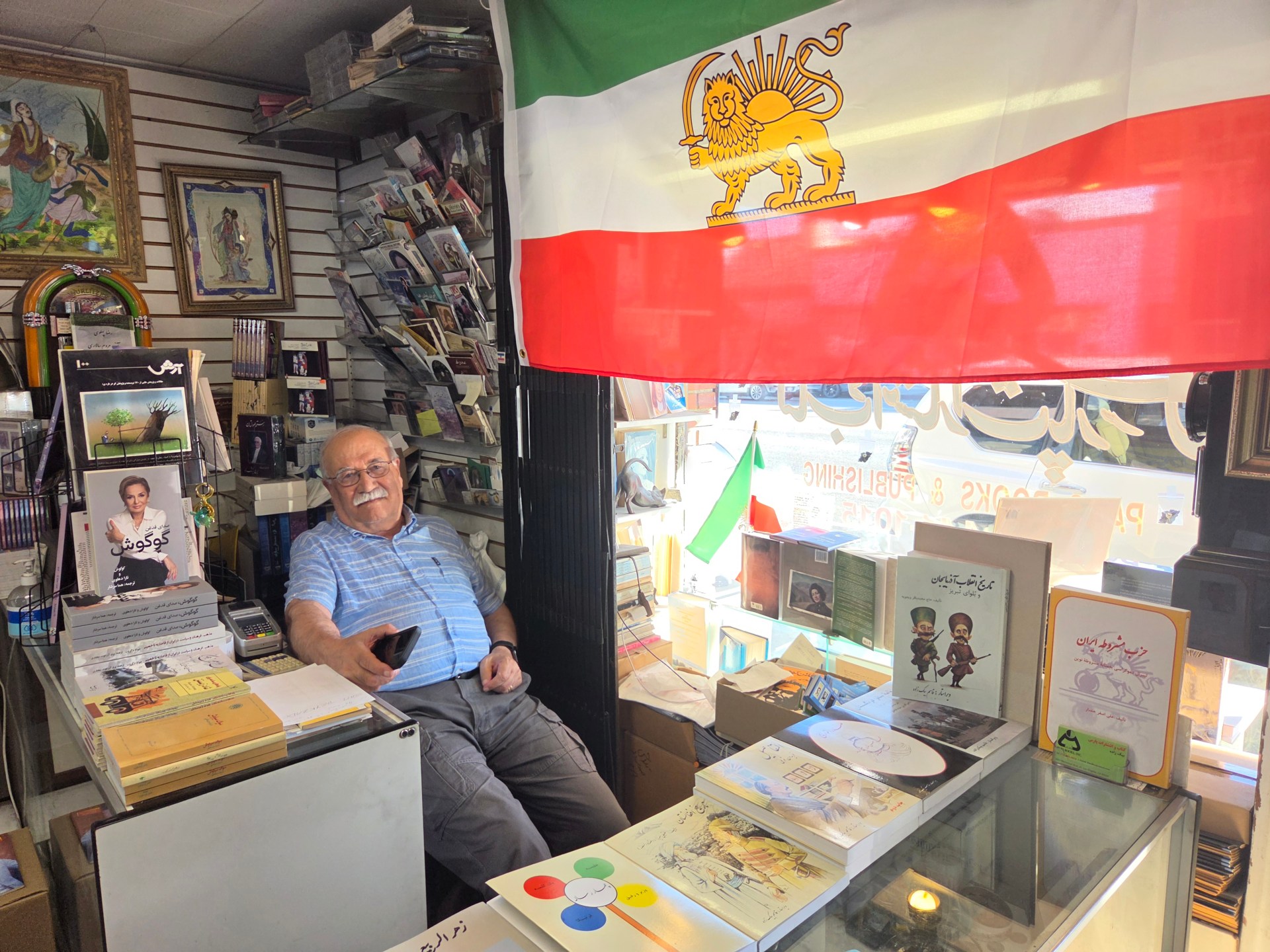
And with Iran’s pre-1979-revolution lion-and-sun flag on display across the area, alongside the occasional portrait of opposition figure Reza Pahlavi, the community’s stance against the Iranian government also becomes apparent.
- list 1 of 3Amad Diallo scores 90th-minute goal in Ivory Coast’s win over Ecuador
- list 2 of 3Ecuadorian World Cup fans takeover Philly’s Rocky Steps
- list 3 of 3Sweden thrash Tunisia in grand start to World Cup campaign
end of list
Several protests have already taken place against the participation of Iran – known as Team Melli – in the tournament.
But as the Iranian national team prepares to kick off its World Cup in Los Angeles on Monday, business owner Roozbeh Farahanipour says Iranian Americans’ position on Team Melli is more nuanced than what the visuals may suggest.
“The community is divided,” Farahanipour told Al Jazeera.
Some opposition activists view the squad as an extension of the governing system in Tehran, and are planning protests outside the stadium in Los Angeles.
But many other Iranian Americans just want to watch the game and are putting politics aside.
Opposition to the Iranian government runs deep in Westwood. Known as Tehrangeles, the area is a stronghold for supporters of Pahlavi, the son of Iran’s last monarch who was toppled by the 1979 revolution that established the Islamic republic.
But while anti-regime sentiment is prevalent, Farahanipour said people here are not in full agreement on proverbially booing the Iranian team at the World Cup – or cheering for the US-Israel war against their homeland.
Farahanipour himself, a veteran opposition activist, is against the war, but he will not be supporting Team Melli.
Advertisement
“When this team is going to go to any international field, to me, they represent the regime, the system will kill many members of my friends and family,” he told Al Jazeera.
Iran’s team or regime’s team?
Sudi Farokhnia, an Iranian American community organiser in Los Angeles, had a different view. She compared supporting the Iranian team while opposing the government to cheering for the United States as a critic of President Donald Trump.
“I’m anti-Trump as hell, but on Friday, when Team USA was playing, I had my USA shirt, I had my USA headpiece on, I had a flag around,” Farokhnia told Al Jazeera.
“I don’t know what are the political views of those who are in the US team … and at this point I don’t care. That’s a separate topic. What I care about is the fact that they’re representing the USA.”
When it comes to Iran’s participation in the World Cup, the Trump administration did not separate the team from the government in Tehran, however.
Team Melli was not allowed to stay in the US and had to set up base in neighbouring Mexico, despite having all of its group stage matches on the other side of the border – two in Los Angeles and one in Seattle.
As the Iranian team arrived in the US on Sunday for its opener against New Zealand a day later, the prospect of renewed fighting between Tehran and Washington was subsiding as the two sides agreed to a ceasefire deal.
The diplomatic breakthrough, however, has done little to reduce the tensions around Iran at the World Cup.
Some anti-Iranian-government activists are adamant about making a show of opposing Team Melli with calls for protests inside and outside the stadium on Monday.
The flag issue
A huge point of contention will be the presence of Iran’s pre-revolution flag in the stands.
Both the old flag and the new, Islamic republic one consist of green, white and red strips from top to bottom, but the official flag features the name of God stylised in the middle.
While FIFA has not given specific guidance on the lion-and-sun emblem, the football governing body has a ban on political symbols that applies to that flag.
It is unclear how stewards will deal with fans if they unfurl antigovernment banners in the stadium.
Last week, Iranian Sports Minister Ahmad Donyamali warned that the team would suspend play if “unofficial flags are brought or slogans against the national team are chanted in the stadiums”.
Farahanipour, the business owner, decried FIFA’s restrictions, saying US guarantees of free speech should trump the federation’s rules.
Advertisement
“FIFA should have control over only the grass field … in the middle of the stadium,” he said. “FIFA don’t have a right to talk about the outside of the field, which is American soil.”
Sam Beykzadeh, who operates a book shop in Westwood, also denounced the FIFA ban.
“This is the Iranian flag,” Beykzadeh told Al Jazeera, pointing to the lion and sun above his head.
He emphasised that he views Team Melli as representative of the Iranian government, not the people.
“That team belongs to [the] regime. It’s not Iranian. [The] Iranian team was those 45,000 people five months ago the regime killed out on the street,” he said, referring to opposition accounts of the death toll during antigovernment protests in January.
Iranian authorities have put the figure at 3,117, including members of the security forces, blaming the deaths on what it said were Israel-backed “rioters”.
Beykzadeh predicted unrest at Monday’s match.
“Monday is going to be a big conflict over there between Iranians and between that regime … and their own supporters they brought from other places over there for fighting with the people,” he said.
US authorities appear to have stepped up protection for the Iranian team. Al Jazeera witnessed several police vehicles accompanying the Iranian team bus on Monday.

‘Players are getting all the hate’
For Farokhnia, the hostility towards the Iranian team is unwarranted. She argued that after the failure of the US-Israel war to dislodge the governing system in Tehran, some Iranian Americans are channelling their anger at Team Melli players.
“Where you feel helpless and you feel like you don’t have any power to make a difference where it really counts, you look for any other venues where you can insert yourself,” Farokhnia said.
“And it just happens to be that the FIFA game is happening, so the players are getting all the hate.”
Iranian head coach Amir Ghalenoei told reporters on Sunday that his team wants to represent all Iranians at home and abroad when asked about anticipated protests by Iranian Americans.
“I am very happy to be representing the strong and proud nation of Iran,” he said.
“I hope that football will bring about joy and enjoyment and will bring closer cultures and countries, and I hope the World Cup will go well despite the travel problems we had.”
Iranian fans have also faced a travel ban by the US.
Yasmine Taeb, an Iranian American civil rights lawyer from Virginia, condemned the Trump administration’s treatment of the Iranian players and fans, saying it “runs counter to the World Cup serving as an open, global sporting event”.
Taeb also slammed protests against the team.
“I think it’s disgraceful, unfortunate and inappropriate. Sports bring people of all backgrounds and beliefs together, and Team Melli’s participation should certainly be seen as a positive development,” Taeb told Al Jazeera.
Related News
UN human rights leader calls for Cuba sanctions to be ‘lifted immediately’
Thousands protest in Albania against coastal resort linked to Jared Kushner
Minister condemns ‘racist thuggery’ as violence returns to Northern Ireland